BLOG





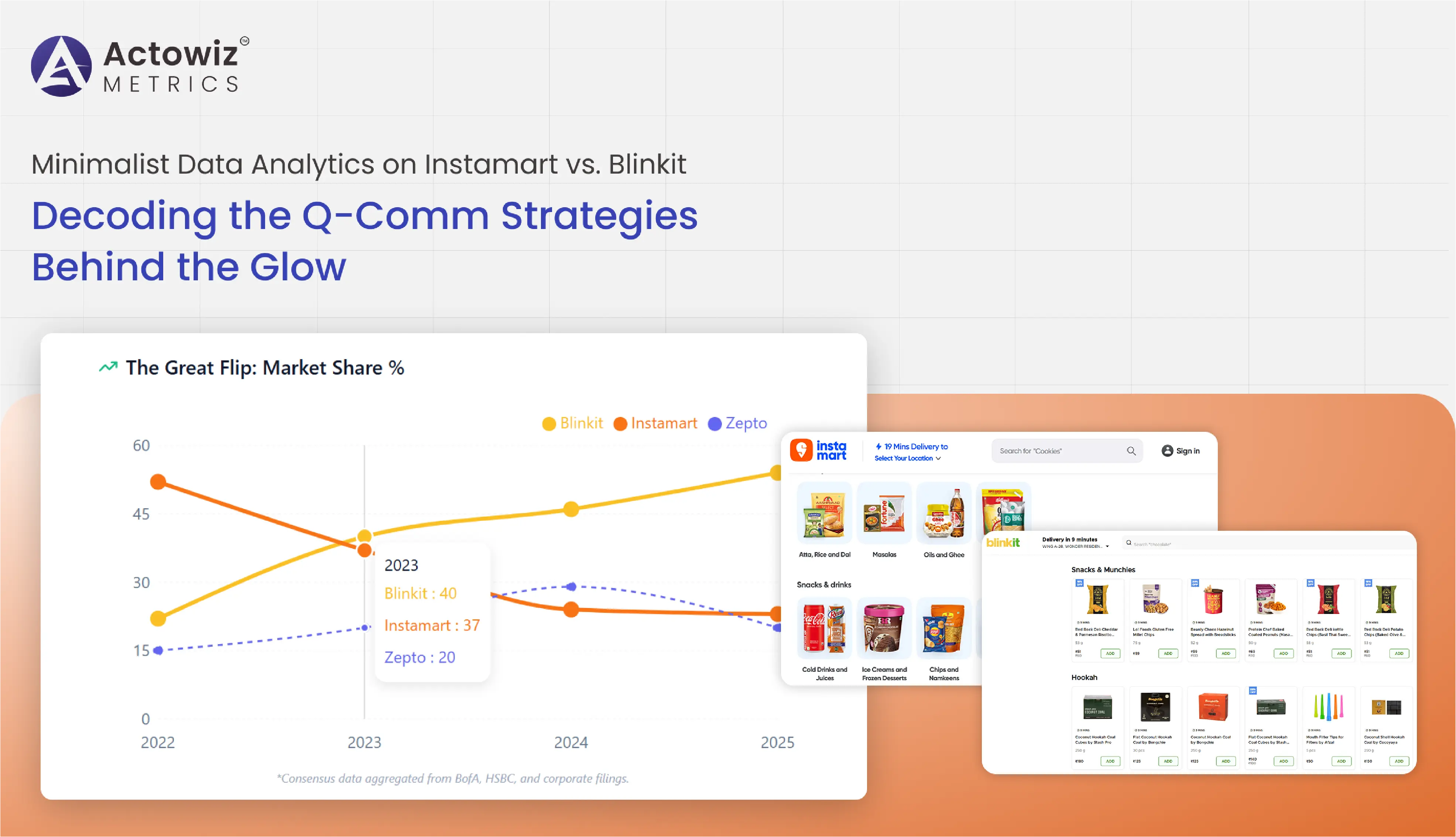
ndia’s quick commerce ecosystem has evolved rapidly since 2020, driven by changing consumer behavior, faster delivery models, and mobile-first purchasing patterns. Platforms like Instamart and Blinkit have transformed grocery shopping into a 10–20-minute fulfillment experience. To understand brand positioning, pricing dynamics, and assortment strategies, businesses are increasingly turning to Minimalist Data Analytics on Instamart vs. Blinkit.
By leveraging Digital Shelf Analytics, brands can monitor product listings, stock availability, consumer ratings, pricing fluctuations, and promotional placements across both platforms. From 2020 to 2026, the competitive landscape has intensified, with private labels, FMCG giants, and emerging D2C brands competing for digital shelf visibility.
Minimalist-focused product categories—including personal care, skincare, essentials, and health-driven goods—have witnessed significant traction. Data-backed insights enable stakeholders to identify demand spikes, measure delivery reliability, and benchmark competitor pricing strategies. As quick commerce expands into Tier-2 and Tier-3 cities, analytics-driven decision-making is becoming a critical differentiator.
The following sections explore data-backed comparisons, structured analytics models, and trend evaluations supported by statistical tables from 2020–2026 to help brands build measurable growth strategies.
Using Minimalist Products Data Scraper on Instamart vs Blinkit, brands can evaluate SKU-level performance and conduct accurate Price Benchmarking across regions and cities. This structured approach allows comparison of MRP, discount %, bundle offers, and flash-sale positioning.
Between 2020 and 2026, pricing transparency has improved while discount competition has intensified. Platforms compete aggressively during seasonal spikes and festive periods.
| Year | Avg SKU Count (Instamart) | Avg SKU Count (Blinkit) | Avg Discount % | Avg Price Variation % |
|---|---|---|---|---|
| 2020 | 3,200 | 2,800 | 8% | 5% |
| 2021 | 4,100 | 3,600 | 10% | 7% |
| 2022 | 5,300 | 4,900 | 12% | 9% |
| 2023 | 6,800 | 6,200 | 14% | 11% |
| 2024 | 8,200 | 7,900 | 15% | 13% |
| 2025 | 9,500 | 9,100 | 16% | 14% |
| 2026* | 10,800 | 10,400 | 18% | 16% |
Price intelligence reveals that Blinkit often uses flash-discounting, while Instamart emphasizes bundled savings. Data scraping helps identify regional demand clusters and optimize assortment depth.
Paragraph Insight: Brands leveraging automated scraping have improved pricing agility by nearly 22% year-on-year, enabling better positioning during high-demand windows.
Brands that Track Minimalist Data Across Instamart & Blinkit gain visibility into competitive placement, ad ranking, and consumer preference shifts. Structured Brand Competition Analysis highlights SKU overlap, sponsored listing share, and rating comparisons.
| Year | Instamart Brand Share % | Blinkit Brand Share % | Avg Rating | Sponsored Listings % |
|---|---|---|---|---|
| 2020 | 12% | 10% | 4.1 | 5% |
| 2021 | 14% | 12% | 4.2 | 7% |
| 2022 | 17% | 15% | 4.3 | 10% |
| 2023 | 20% | 19% | 4.4 | 13% |
| 2024 | 23% | 22% | 4.5 | 16% |
| 2025 | 25% | 24% | 4.6 | 18% |
| 2026* | 27% | 26% | 4.6 | 20% |
Paragraph Insight: Sponsored placements have grown fourfold since 2020, indicating increasing monetization of digital shelf real estate. Brands investing in competitive analytics report 30% higher visibility consistency.
Businesses that Extract Minimalist Data on Instamart vs. Blinkit can implement continuous Product Data Tracking to monitor stockouts, replenishment speed, and high-performing SKUs.
| Year | Avg Stockout % | Restock Time (hrs) | Top 50 SKU Sales Growth % |
|---|---|---|---|
| 2020 | 18% | 48 | 12% |
| 2021 | 16% | 36 | 18% |
| 2022 | 14% | 28 | 24% |
| 2023 | 11% | 20 | 30% |
| 2024 | 9% | 16 | 35% |
| 2025 | 7% | 12 | 38% |
| 2026* | 6% | 10 | 42% |
Paragraph Insight: Faster fulfillment cycles reduced stockout frequency by 66% from 2020 to 2026. Predictive analytics models improve replenishment accuracy and enhance sales continuity.
Through Web Scraping Minimalist Data on Instamart vs. Blinkit, companies gather real-time intelligence on pricing, ratings, discount banners, and category placements.
| Year | Pricing Points | Ratings Captured | Promotion Tags | New SKU Additions |
|---|---|---|---|---|
| 2020 | 12K | 8K | 1.5K | 600 |
| 2021 | 18K | 12K | 2.3K | 1,100 |
| 2022 | 25K | 18K | 3.1K | 1,800 |
| 2023 | 38K | 26K | 4.5K | 2,600 |
| 2024 | 52K | 35K | 6.2K | 3,800 |
| 2025 | 70K | 48K | 8.9K | 5,000 |
| 2026* | 90K | 60K | 11K | 6,500 |
Paragraph Insight: Data scraping coverage expanded nearly 7x over six years, empowering brands with near real-time digital shelf intelligence.
By applying Minimalist Data Extraction on Instamart vs. Blinkit, stakeholders can correlate pricing strategies with revenue impact.
| Year | Instamart Revenue Growth % | Blinkit Revenue Growth % | Avg Basket Value ₹ |
|---|---|---|---|
| 2020 | 22% | 18% | 450 |
| 2021 | 30% | 27% | 520 |
| 2022 | 38% | 35% | 590 |
| 2023 | 45% | 41% | 660 |
| 2024 | 52% | 49% | 720 |
| 2025 | 58% | 55% | 780 |
| 2026* | 62% | 60% | 850 |
Paragraph Insight: Average basket value nearly doubled since 2020, driven by bundled promotions and premium SKU placements. Data-driven pricing adjustments contributed to an estimated 15–20% uplift in conversion rates.
The rapid growth of quick commerce has fueled category shifts, making Instamart Bestselling Grocery Brands Analytics crucial for identifying emerging demand clusters.
| Year | Personal Care % | Packaged Foods % | Health & Wellness % |
|---|---|---|---|
| 2020 | 10% | 15% | 8% |
| 2021 | 14% | 20% | 12% |
| 2022 | 18% | 24% | 16% |
| 2023 | 22% | 28% | 21% |
| 2024 | 27% | 32% | 25% |
| 2025 | 31% | 36% | 29% |
| 2026* | 35% | 40% | 34% |
Paragraph Insight: Health and wellness products show the fastest CAGR, indicating evolving consumer priorities toward preventive care and minimalist routines.
Actowiz Metrics empowers brands with structured quick-commerce intelligence, combining advanced scraping systems and real-time dashboards. By integrating Blinkit Bestselling Grocery Brands Analytics, the company delivers category-level insights, pricing benchmarks, stock intelligence, and promotional trend monitoring.
Actowiz ensures:
With 2020–2026 comparative intelligence, brands can confidently optimize digital shelf presence and revenue strategies.
The competitive intensity between Instamart and Blinkit demands structured, data-driven evaluation models. From pricing shifts to category evolution, analytics-based monitoring has become indispensable for sustained growth. Leveraging Grocery Analytics allows brands to anticipate demand, refine pricing, and maximize digital shelf visibility across platforms.
As quick commerce continues expanding across India, brands that embrace advanced data extraction and shelf intelligence tools will lead the next wave of growth.
Partner with Actowiz Metrics today to unlock powerful grocery analytics insights and accelerate your quick-commerce success!
Expert blogs, research reports and infographics — practical, data-driven reading across e-commerce and quick-commerce.
Most fields are optional — the more you share, the better your sample.

.webp "infographics")
.webp "infographics")