BLOG
















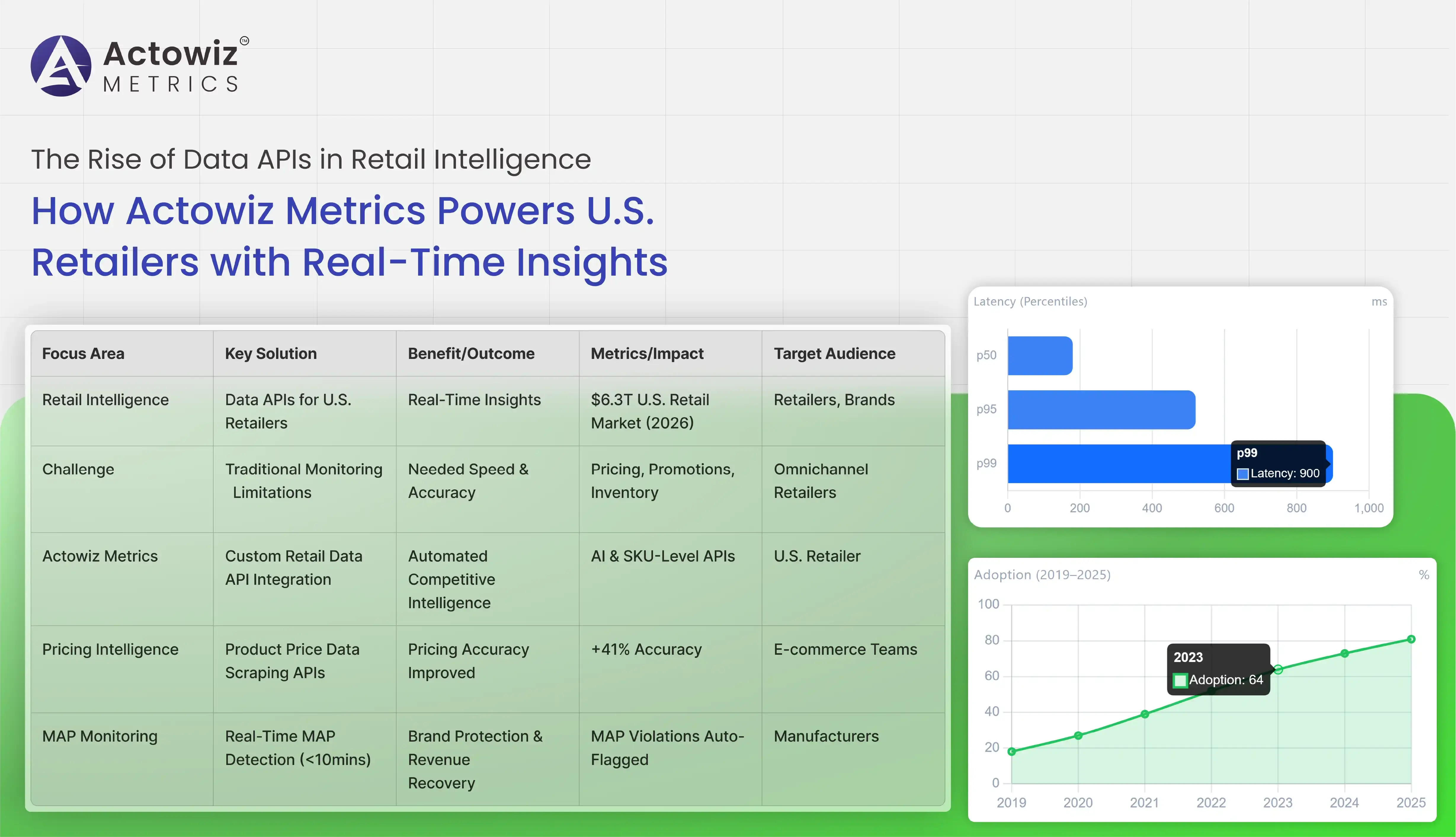
In a $6.3 trillion U.S. retail market projected for 2026, staying ahead of competitors requires precision, speed, and reliable data. Traditional retail monitoring methods simply cannot keep pace with the rapidly changing nature of product pricing, promotions, and inventory.
Actowiz Metrics, a leader in retail intelligence data APIs, partnered with a major U.S.
omnichannel retailer to address these challenges head-on. Using custom retail data API integration, AI-powered e-commerce data analytics, and SKU-level retail analytics APIs, the retailer automated competitive intelligence, inventory tracking, and market trend analysis.
The outcome was game-changing:
This case study provides a complete view of how Actowiz Metrics designed and implemented a scalable retail product data scraping API ecosystem, enabling proactive market strategies and data-driven retail decision-making in the competitive U.S. market.
The U.S. retail industry is the largest in the world, with online retail accounting for over 15% of total sales and growing rapidly. Consumer buying patterns are influenced by dynamic factors: price changes, product availability, and competitor promotions. In this high-speed environment, data is the foundation for competitive advantage.
According to industry studies, 72% of U.S. retailers adjust pricing more than once a week, and in certain categories like electronics and grocery, prices can change multiple times per day. On platforms like Amazon and Walmart, automated repricing algorithms can alter product prices within minutes based on competitor moves.
For omnichannel retailers, digital shelf visibility is equally important — ensuring that products appear in the right search positions with competitive pricing and strong reviews. Missing from these shelves means lost sales.
Market Gap
Many retailers still rely on manual price tracking, outdated web crawlers, or third-party reports with delayed data. These approaches fail to deliver real-time competitive intelligence, leading to:
The gap lies in real-time retail product availability data scraping and custom retail API integration that seamlessly feeds actionable insights into existing retail systems.
Why Now
Post-pandemic, U.S. shoppers are more price-sensitive and less brand-loyal. Retailers are competing not just on price but also on stock availability and delivery speed. The rise of AI-powered e-commerce data analytics has made it possible to forecast pricing trends, detect anomalies, and anticipate competitor moves before they happen.
For this retailer, the need to integrate retail market trend analysis APIs was urgent — competitors were undercutting prices in key categories by as much as 20% during flash sales, while MAP violations were eroding brand value.
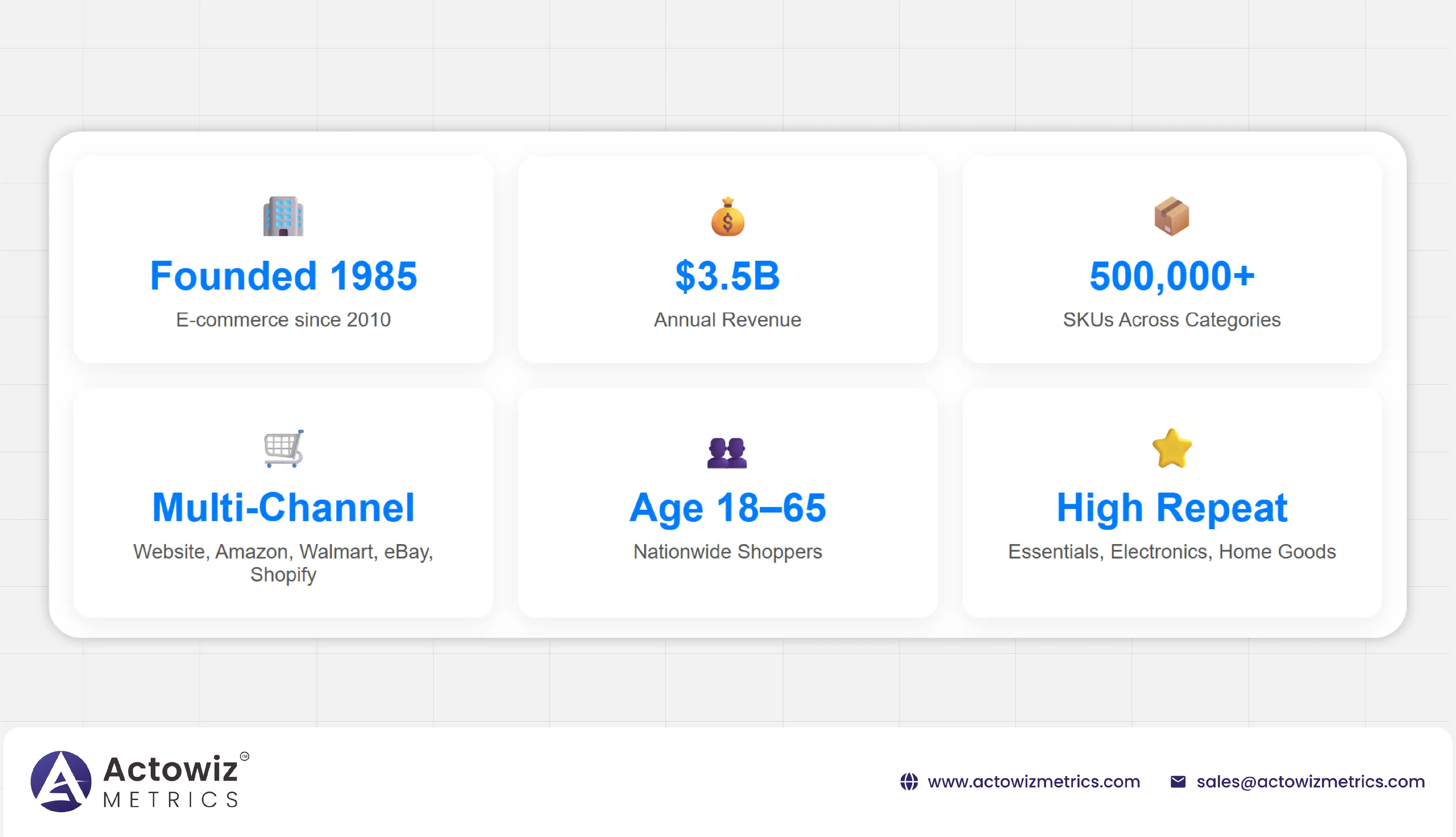
The client is a top-tier U.S. omnichannel retailer operating across electronics, fashion, household goods, and grocery.
Key Facts:
Customer Profile:
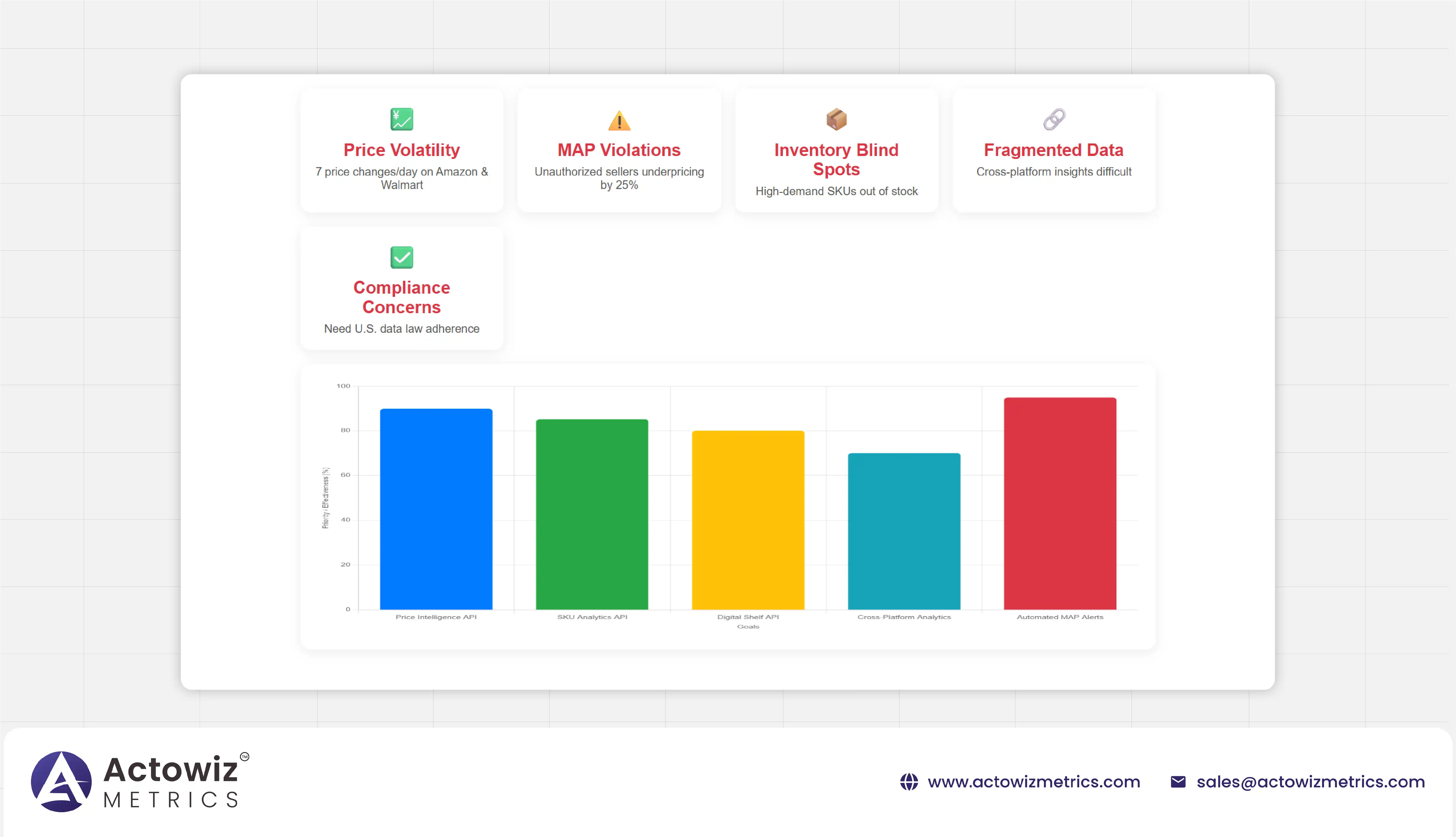
Key Challenges
1. Price Volatility
Competitors on Amazon and Walmart altered prices up to 7 times a day in high-margin categories. Manual tracking meant the client often reacted too late.
2. MAP Violations
Unauthorized sellers were underpricing branded goods by up to 25%, affecting trust and profit margins.
3. Inventory Blind Spots
High-demand SKUs went out of stock unnoticed, causing revenue loss during peak demand periods.
4. Fragmented Data Sources
Different platforms meant data existed in silos, making cross-platform trend analysis nearly impossible.
5. Compliance Concerns
The client needed a solution that adhered to U.S. data compliance laws and respected marketplace terms of service.
Goals
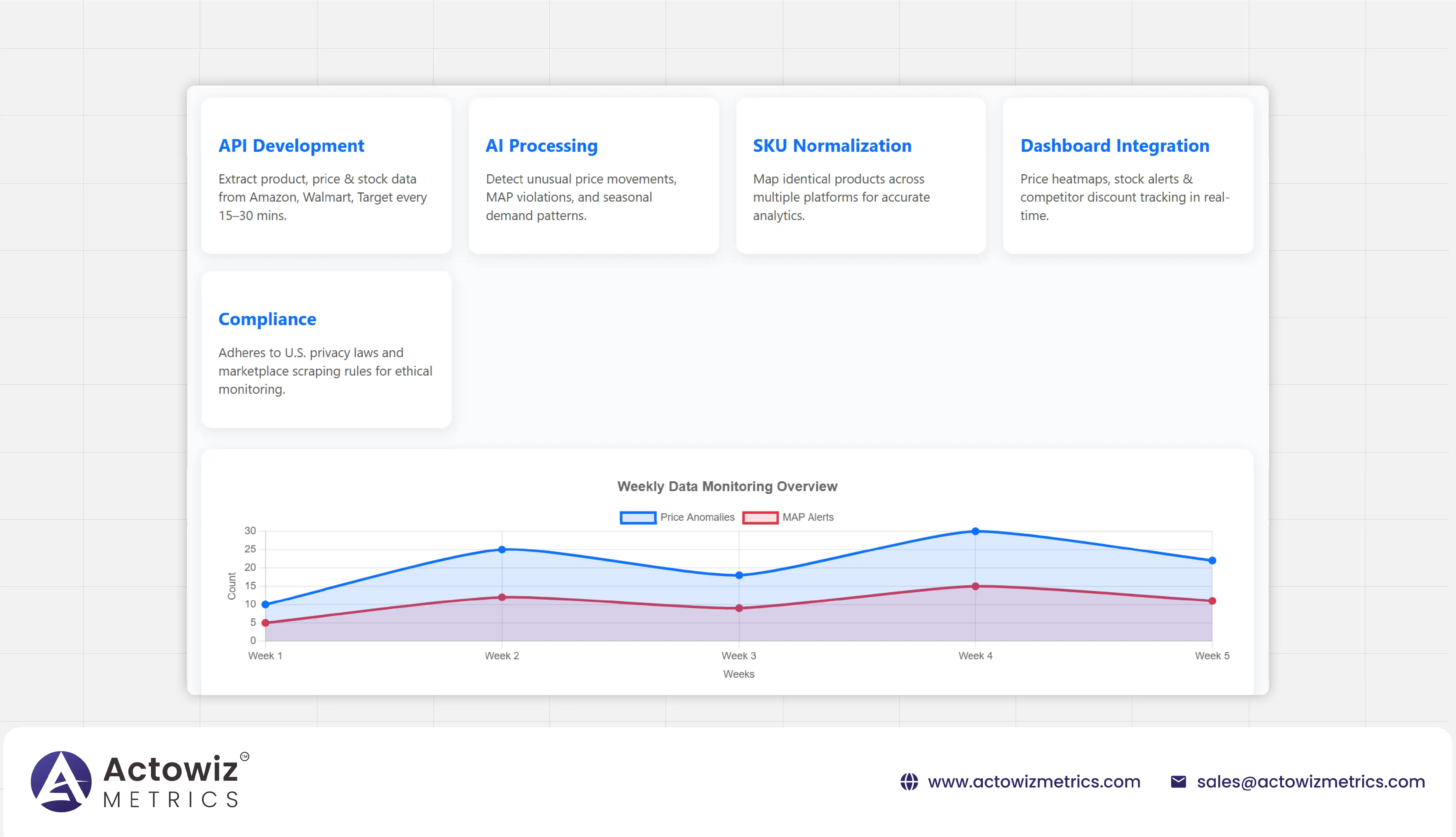
Actowiz Metrics designed a multi-layered retail intelligence framework consisting of:
Step 1: Custom Retail Data API Development
A dedicated API infrastructure was built to pull product listing data, prices, discounts, and stock status every 15–30 minutes from Amazon, Walmart, and Target.
Step 2: AI-Powered Data Processing
Machine learning models were trained to detect:
Step 3: SKU Mapping & Data Normalization
Since the same product can appear under multiple listings across platforms, SKU normalization ensured accurate cross-platform analysis.
Step 4: Dashboard Integration
The retail market trend analysis API fed into a real-time dashboard with:
Step 5: Compliance & Ethical Data Use
Data collection adhered to U.S. privacy laws and marketplace scraping guidelines. APIs were designed to avoid overloading servers, ensuring sustainable long-term monitoring.
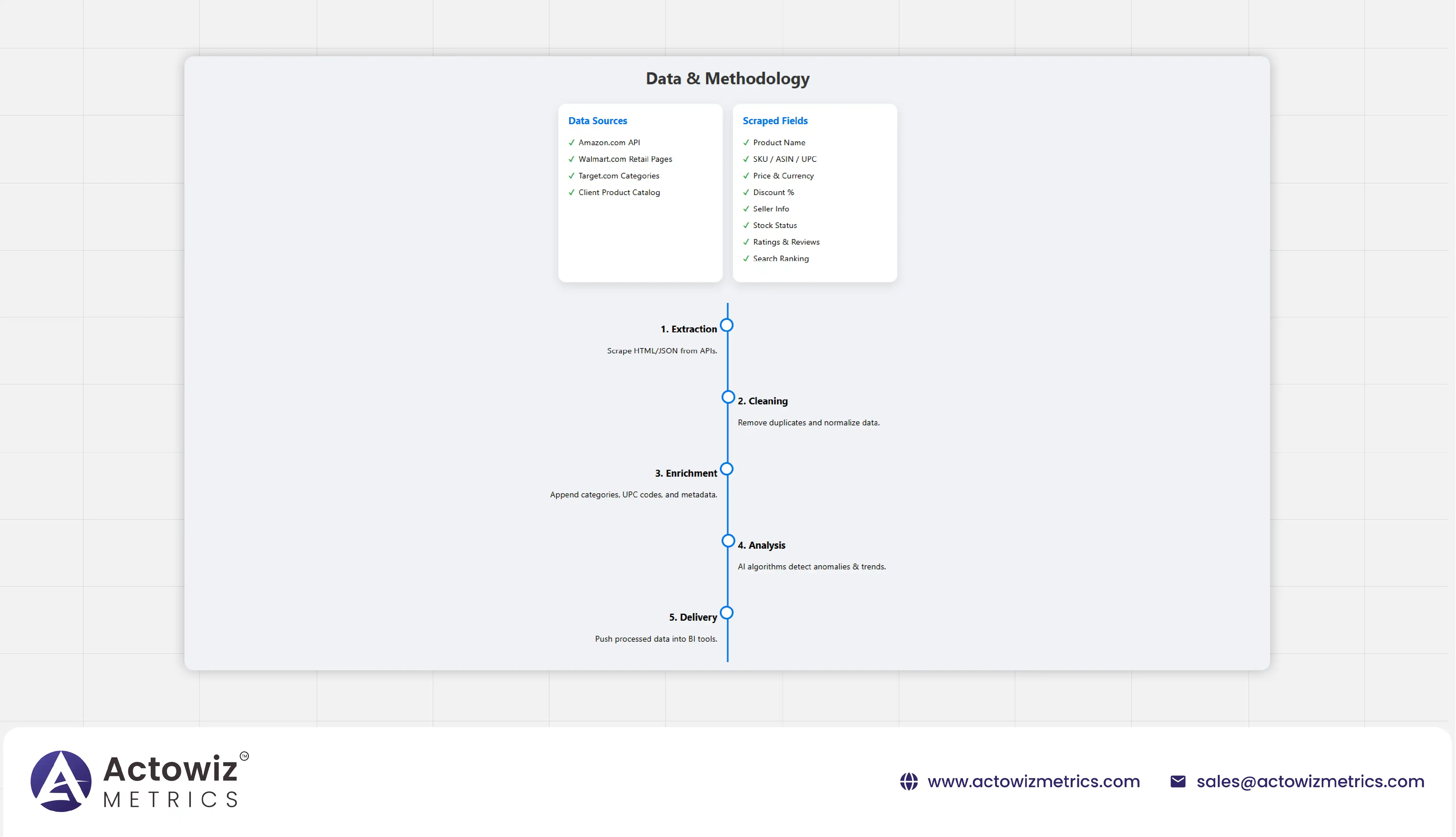
Data Sources:
Scraped Fields:
Data Processing Workflow:
1. Extraction : Data scraping API retrieves raw product HTML/JSON.
2. Cleaning : Remove duplicates, normalize brand names.
3. Enrichment : Append category tags, UPC codes.
4. Analysis : AI-powered algorithms flag anomalies.
5. Delivery : API pushes processed data into retailer’s BI tools.
| Product Name | Price | Discount | Seller | Stock Status | Ratings | Search Rank |
|---|---|---|---|---|---|---|
| Wireless Earbuds X1 | $59.99 | 10% | Retailer A | In Stock | 4.5 | 3 |
| Smartwatch Pro 2 | $199 | 15% | Retailer B | Out of Stock | 4.2 | 7 |
| 4K LED TV 55" | $499 | 20% | Retailer C | In Stock | 4.6 | 2 |
| Laptop AirBook 14 | $899 | 5% | Retailer D | Low Stock | 4.7 | 5 |
| Gaming Console Max | $399 | 12% | Retailer E | In Stock | 4.8 | 1 |
| Blender ProMix 900W | $129 | 8% | Retailer F | In Stock | 4.4 | 4 |
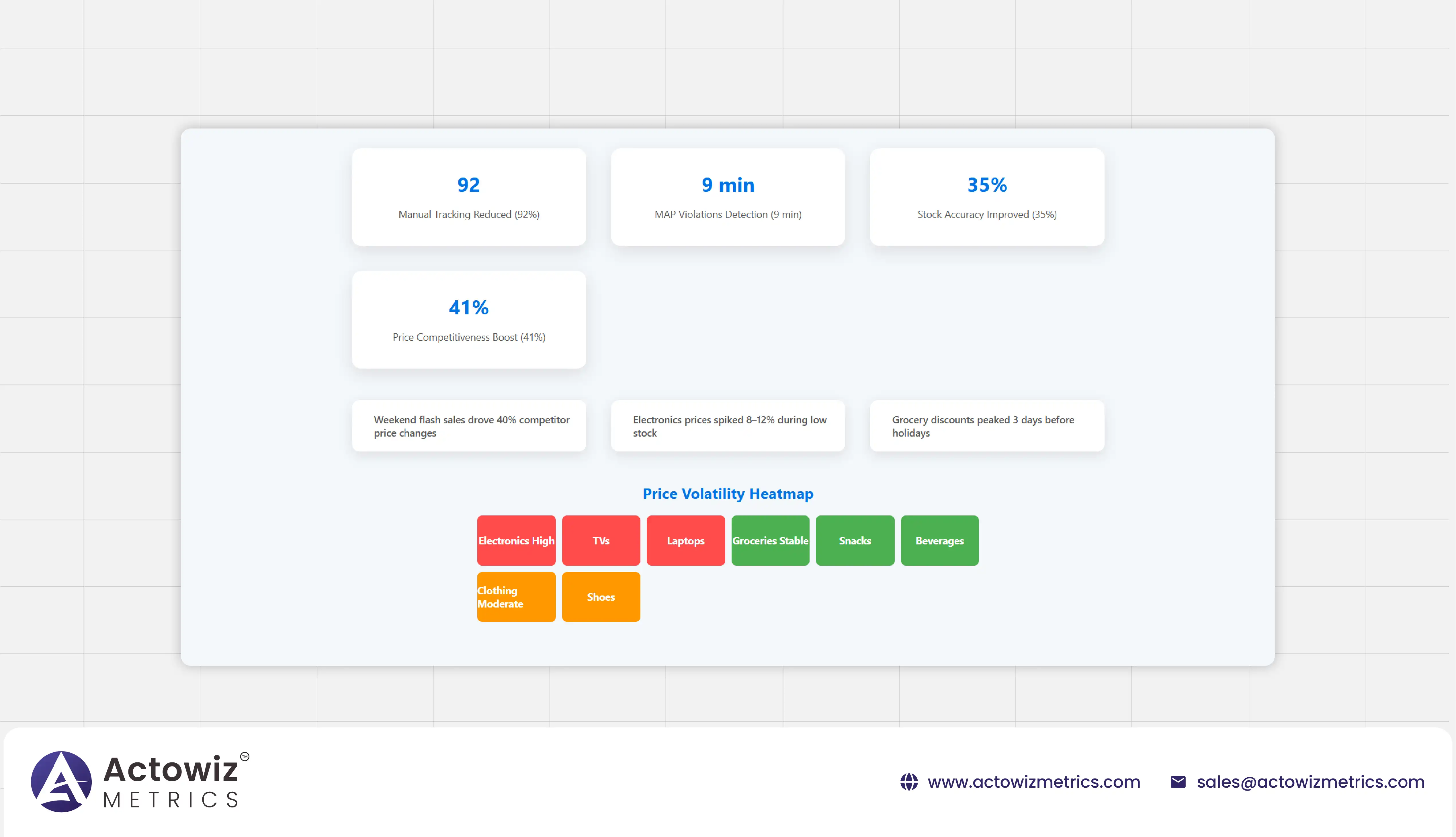
Key Outcomes:
Trend Observations:
Visualization:
Price heatmaps showed electronics were most volatile, while grocery pricing remained steady except during holiday promotions.
“Actowiz Metrics’ retail intelligence data APIs completely changed our workflow. Instead of reacting to competitor moves days later, we’re now ahead of the curve. MAP compliance is stronger than ever, and our pricing strategy is sharper thanks to SKU-level analytics. The integration was smooth, and their adherence to compliance standards gave us confidence that our competitive intelligence is sustainable and ethical.”
— Head of E-Commerce, [Client Company]
Actowiz Metrics proved that data-driven retail intelligence is no longer optional in the U.S. market. By combining retail product data scraping APIs, custom retail data API integration, and AI-powered analytics, the client transformed their retail operations from reactive to predictive.
Next Steps:
Expand competitive tracking to Canadian and UK markets.
Integrate predictive demand planning using AI.
Explore image recognition APIs for visual shelf monitoring.
With this scalable architecture, the retailer is ready to face the next era of competitive e-commerce where real-time retail digital shelf tracking will be the norm.
Expert blogs, research reports and infographics — practical, data-driven reading across e-commerce and quick-commerce.
Most fields are optional — the more you share, the better your sample.

.webp "infographics")
.webp "infographics")