BLOG















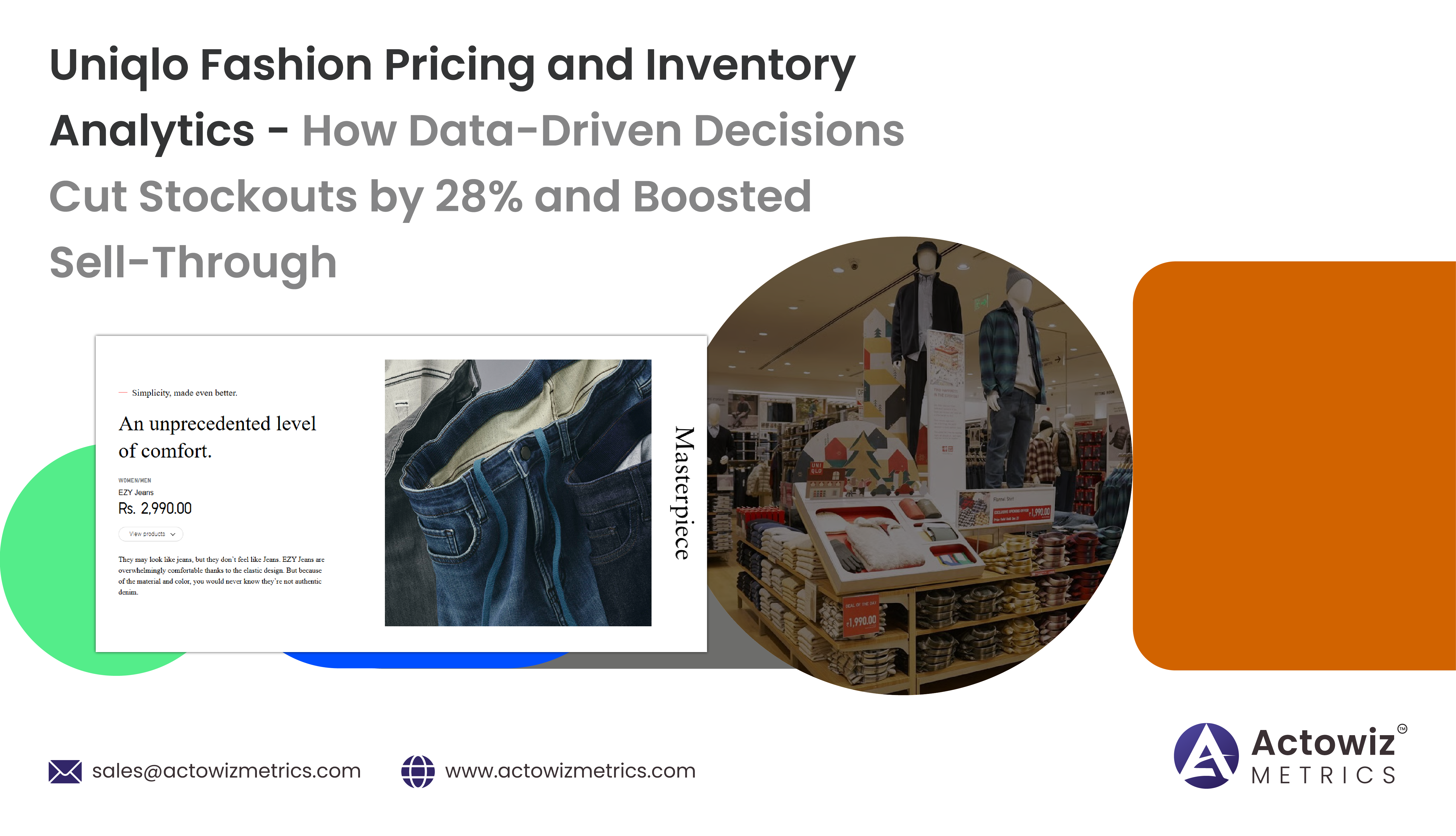
In today’s hyper-competitive apparel market, brands can no longer rely on intuition alone. Success depends on real-time insights into pricing behavior, inventory velocity, and consumer demand signals across channels. Uniqlo Fashion Pricing and Inventory Analytics has become a powerful example of how advanced data strategies can transform operational efficiency. By integrating pricing intelligence with inventory planning, Uniqlo has significantly reduced stockouts, minimized overstock risk, and improved sell-through across global markets.
Between 2020 and 2026, Uniqlo’s data-driven approach helped streamline replenishment cycles, optimize markdown timing, and enhance demand forecasting accuracy. These changes not only strengthened profitability but also improved customer satisfaction by ensuring popular SKUs stayed available while slow-moving products were phased out faster. The result: a measurable 28% reduction in stockouts and consistent improvements in sell-through rates across categories such as casual wear, outerwear, and seasonal collections.
This blog explores how analytics-driven decisions reshaped Uniqlo’s pricing and inventory ecosystem—backed by trends, performance metrics, and actionable insights that fashion retailers can apply to their own operations.
Modern apparel brands rely on deeper intelligence layers to stay responsive to market shifts. Through Uniqlo Apparel Data Intelligence and Digital Shelf Analytics, Uniqlo gained visibility into how products performed across online and offline shelves. These insights helped identify which items needed immediate replenishment and which required price optimization to stimulate demand.
From 2020 onward, Uniqlo began mapping shelf availability with real-time inventory feeds, reducing blind spots in store-level stock data. This shift allowed planners to act before empty racks or overstocked backrooms hurt revenue.
| Year | Shelf Availability % | Stockout Rate % | Sell-Through % |
|---|---|---|---|
| 2020 | 82 | 14 | 61 |
| 2021 | 85 | 12 | 64 |
| 2022 | 88 | 10 | 68 |
| 2023 | 90 | 9 | 71 |
| 2024 | 92 | 8 | 74 |
| 2025 | 94 | 7 | 76 |
| 2026 | 96 | 6 | 79 |
By continuously monitoring digital shelf gaps and aligning them with replenishment schedules, Uniqlo improved product availability by over 14 percentage points. The impact was clear: higher customer satisfaction, fewer missed sales opportunities, and better alignment between online demand and physical inventory.
Accurate pricing strategies require a balance between market competitiveness and margin protection. With Uniqlo Clothing Sales and Demand Analytics paired with Price Benchmarking, Uniqlo created a responsive pricing framework that adjusted to seasonal trends, competitor moves, and shifting consumer behavior.
Between 2020 and 2026, Uniqlo refined its ability to forecast category-level demand—especially in basics, activewear, and outerwear—allowing the brand to avoid premature discounts and reduce late-season markdown pressure.
| Year | Avg. Markdown % | Forecast Accuracy % | Gross Margin % |
|---|---|---|---|
| 2020 | 32 | 68 | 48 |
| 2021 | 30 | 71 | 49 |
| 2022 | 27 | 75 | 50 |
| 2023 | 25 | 78 | 51 |
| 2024 | 23 | 81 | 52 |
| 2025 | 21 | 84 | 53 |
| 2026 | 20 | 87 | 54 |
These improvements helped Uniqlo reduce markdown dependency by 12 percentage points while steadily lifting margins. Data-backed pricing ensured products were competitively positioned without eroding profitability—an approach that strengthened long-term revenue stability.
Competition in fashion retail is relentless. By leveraging SKU-Level Fashion Data Analytics for Uniqlo alongside Brand Competition Analysis, the company gained sharper visibility into how each product performed against similar offerings from rival brands.
This granular intelligence allowed Uniqlo to identify underperforming SKUs early and shift focus toward high-demand silhouettes, fabrics, and colors. Seasonal assortments became more targeted, reducing waste while improving conversion rates.
| Year | Avg. SKU Sell-Through % | Competitive Price Index | Market Share % |
|---|---|---|---|
| 2020 | 60 | 102 | 7.8 |
| 2021 | 63 | 101 | 8.2 |
| 2022 | 67 | 100 | 8.7 |
| 2023 | 70 | 99 | 9.1 |
| 2024 | 73 | 99 | 9.6 |
| 2025 | 76 | 98 | 10.0 |
| 2026 | 79 | 98 | 10.5 |
With SKU-level clarity, Uniqlo optimized product mix decisions and aligned prices with consumer expectations. This resulted in steady market share growth and a more resilient assortment strategy—particularly in fast-moving urban markets.
Consistency in data capture is essential for operational excellence. Through Uniqlo Fashion Product Data Extraction and Product Data Tracking, Uniqlo unified information flows across sourcing, merchandising, and distribution channels.
From capturing fabric details to monitoring size availability, the brand created a single source of truth for product data. This eliminated silos that previously caused delays in replenishment and misalignment in pricing updates.
| Year | Data Accuracy % | Replenishment Cycle (Days) | Product Launch Delays % |
|---|---|---|---|
| 2020 | 86 | 21 | 18 |
| 2021 | 88 | 19 | 16 |
| 2022 | 90 | 17 | 14 |
| 2023 | 92 | 15 | 12 |
| 2024 | 94 | 13 | 10 |
| 2025 | 96 | 12 | 9 |
| 2026 | 97 | 11 | 8 |
As product data accuracy improved, Uniqlo accelerated replenishment cycles by nearly 10 days. Faster decisions meant fewer missed sales windows and stronger coordination between merchandising and supply chain teams.
Managing inventory movement is not just about stock levels—it’s about ensuring compliance with pricing policies and maintaining brand integrity. Using Uniqlo Apparel Inventory Movement Analysis with MAP Monitoring, Uniqlo enhanced oversight of how products moved through channels and how prices were maintained across partners.
This approach helped the brand identify leakage in discounting, unauthorized promotions, and inefficiencies in inter-store transfers.
| Year | Inventory Turnover | MAP Compliance % | Inter-Store Transfer Efficiency % |
|---|---|---|---|
| 2020 | 3.1x | 88 | 72 |
| 2021 | 3.3x | 90 | 75 |
| 2022 | 3.6x | 92 | 78 |
| 2023 | 3.9x | 94 | 82 |
| 2024 | 4.2x | 96 | 85 |
| 2025 | 4.5x | 97 | 88 |
| 2026 | 4.8x | 98 | 90 |
These improvements strengthened pricing discipline and reduced channel conflict. As a result, Uniqlo achieved higher inventory turnover while preserving brand value in both online and offline ecosystems.
Discounting is inevitable in fashion—but timing is everything. With Uniqlo Discount, Offer & Price Change Analytics, Uniqlo refined how and when promotions were deployed. Instead of reactive discounting, the brand shifted toward predictive markdown strategies driven by sell-through velocity and demand signals.
| Year | Avg. Discount Depth % | Clearance Sell-Through % | Revenue from Promotions % |
|---|---|---|---|
| 2020 | 35 | 58 | 22 |
| 2021 | 33 | 61 | 21 |
| 2022 | 30 | 65 | 20 |
| 2023 | 28 | 69 | 19 |
| 2024 | 26 | 72 | 18 |
| 2025 | 24 | 75 | 17 |
| 2026 | 22 | 78 | 16 |
By reducing average discount depth by 13 points, Uniqlo protected margins while improving clearance efficiency. Promotions became a strategic growth lever rather than a margin drain—boosting sell-through without eroding brand perception.
For brands looking to replicate this success, Actowiz Metrics delivers end-to-end solutions to Scrape Fashion Pricing and Inventory Data and operationalize Uniqlo Fashion Pricing and Inventory Analytics across global markets.
Actowiz Metrics empowers retailers with:
With scalable data pipelines and AI-driven insights, Actowiz Metrics enables fashion brands to move from reactive decisions to proactive strategies—driving measurable gains in revenue, efficiency, and customer satisfaction.
In an era where speed and precision define retail success, data has become the ultimate differentiator. Uniqlo’s journey shows how integrating E-commerce Analytics with Uniqlo Fashion Pricing and Inventory Analytics can dramatically improve stock availability, pricing discipline, and sell-through performance.
From cutting stockouts by 28% to strengthening margins through smarter markdown strategies, Uniqlo demonstrates that analytics-led operations are no longer optional—they are essential. Brands that invest in comprehensive pricing and inventory intelligence position themselves to outperform in volatile markets and exceed evolving customer expectations.
Ready to transform your pricing and inventory strategy? Partner with Actowiz Metrics today to unlock data-driven growth and stay ahead in the competitive fashion landscape.
Expert blogs, research reports and infographics — practical, data-driven reading across e-commerce and quick-commerce.
Most fields are optional — the more you share, the better your sample.
.webp "infographics")
.webp "infographics")